
Metropolitan Ecological Linear Park
Spanning 14.7 hectares and 2.5 km along the Piraí River, this co-created, nature-based ecopark will merge flood protection with community wellbeing. As part of the World Bank's Urban Resilience Program for Bolivia, the project includes a park design, baseline environmental and social studies, and a long-term management guide.
A growing city at the ecological edge
Tucked between the Cordón Ecológico and Santa Cruz's expanding suburbs, the Piraí River corridor has long served as the city's natural boundary. Yet today, Santa Cruz faces mounting pressure from climate-related flooding, environmental degradation, and rapid development.
The western riverfront, a critical flood protection buffer zone, requires careful stewardship to maintain its ecological role.
The bordering park acts as an ecotone between the city and this buffer, while mitigating pluvial flood risks. Yet despite the central location, a lack of inclusive, long-term planning has left the area disconnected from the main urban fabric.

It was here that the Municipal Government identified an opportunity to transform 14.7 hectares of underutilized green space and reconnect it to a rapidly growing city. In 2024, ORG and Diana Wiesner Arquitectura y Paisaje SAS were commissioned to guide a transformation under the auspice of the World Bank's Urban Resilience Program. The brief was complex: design a linear park that would strengthen flood resilience, improve the lives of people, and create a true sense of place.
The challenge extended beyond the technical to also encompass cultural considerations: giving voice to surrounding communities to firmly root the new park in local aspirations.
Voices from the riverfront


ORG assembled the 'Unión Temporal Río Piraí', a consortium of local experts to conduct baseline studies and co-design the park. Since March 2024, the team has also held 15 workshops spanning public meetings, co-creation sessions and focus groups.
Bringing together residents, professional colleges of architecture and engineering, municipal departments, indigenous peoples, NGOs, feminist groups and more, these open sessions aim to keep the design in line with community aspirations for safe, vibrant, and ecologically flourishing public spaces.

Shaped by extensive community engagement and iterative design, ORG and partners, closely with the consortium, designed an inclusive approach for the project.


Parkland that lives. Stewardship that endures.


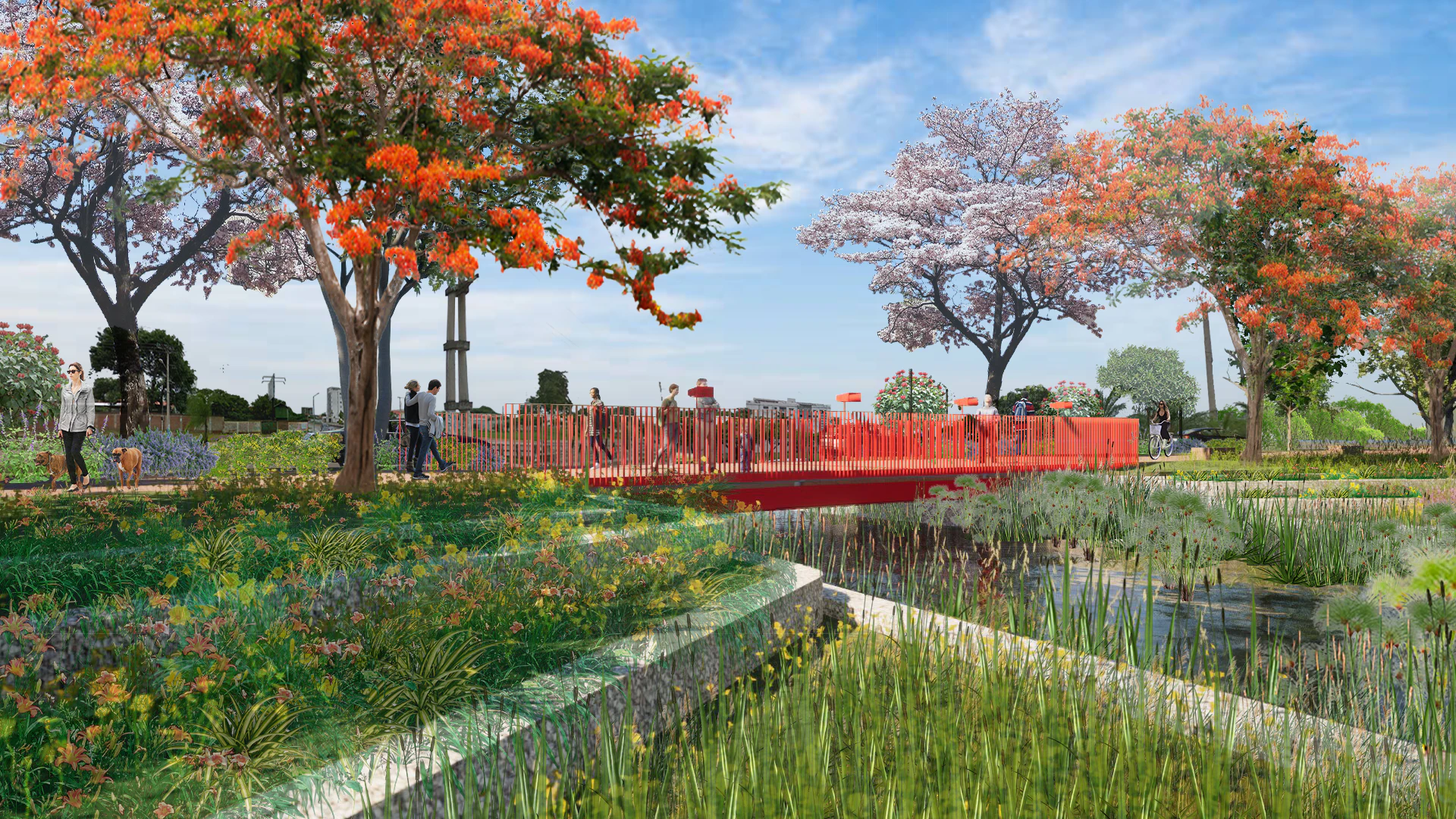
Our master plan for a living ecological park merges a comprehensive blend of nature-based solutions, sustainable urban drainage systems (SUDS), native species, soft mobility, urban green infrastructure and public amenities.

A native, climate-adaptive landscape will integrate walking paths, play areas, and gathering spaces. Framed between the Cordón Ecológico and the fourth city ring, the design also supports urban cooling, local biodiversity, flood protection and social use. Cut off from the city by the fourth ring, the park will also serve to incentivize safer ways of crossing the road by slowing down traffic and integrating a number of pedestrian crossings.


In parallel with the physical design, the team is producing a long-term operational framework for maintaining the park through community stewardship and institutional accountability. Ideas to operate in non-conventional ways, meanwhile, will help to reduce the burden on public administration - a critical consideration in Latin American contexts where municipal resources are often stretched.


