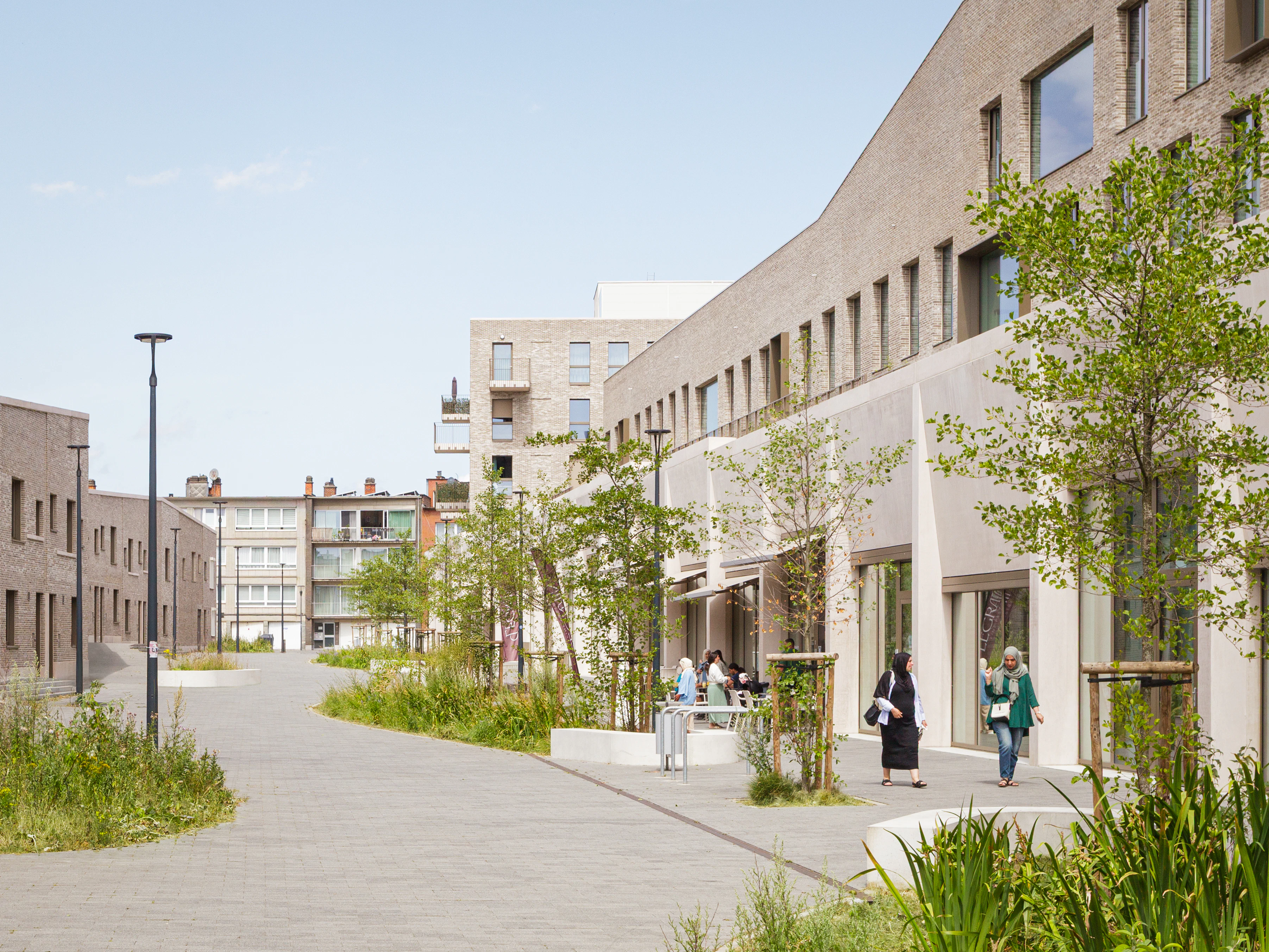
Citygate Marchandises wins 2024 RES Award
Award
Brussels is evolving. As demand for both housing and light industry grows, the two are increasingly competing for space within a limited urban footprint. Citygate Marchandises aims to change that.
Sitting at the intersection of production and people, the Anderlecht site is located adjacent to both railway infrastructure and the Brussels Canal, a zone historically tied to manufacturing, logistics, and traditionally working-class communities.
In 2017, Citydev.brussels set the challenge of designing a single urban block able to balance industrial performance, residential quality and community life – without compromise. As part of the Productive City initiative, a strategy aimed at revitalizing and integrating productive activities such as industry, logistics and circular economy, the block also needed to connect with the surrounding urban fabric of the city.


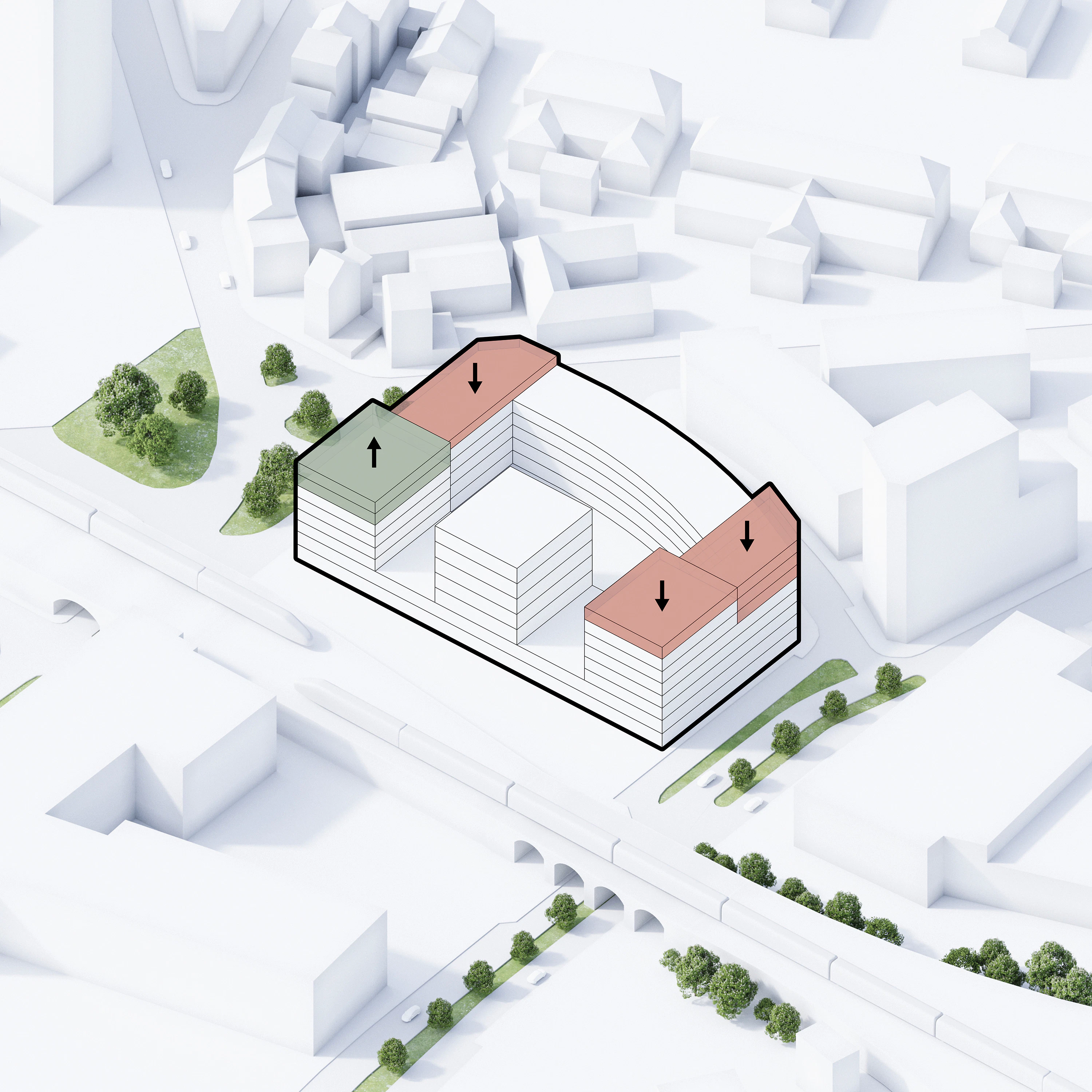


The design needed to fulfil a wide range of public development challenges, such as mitigating noise and privacy concerns while supporting neighborhood connection. These challenges also included meeting high sustainability standards, introducing biodiversity and offering quality housing at a controlled price point. All within a budget of €34 million.

For ORG, this meant creating architecture that performs across multiple scales. A building that functions efficiently day to day. A block that stitches into its surroundings. And a model that demonstrates how cities can grow without losing their productive edge.
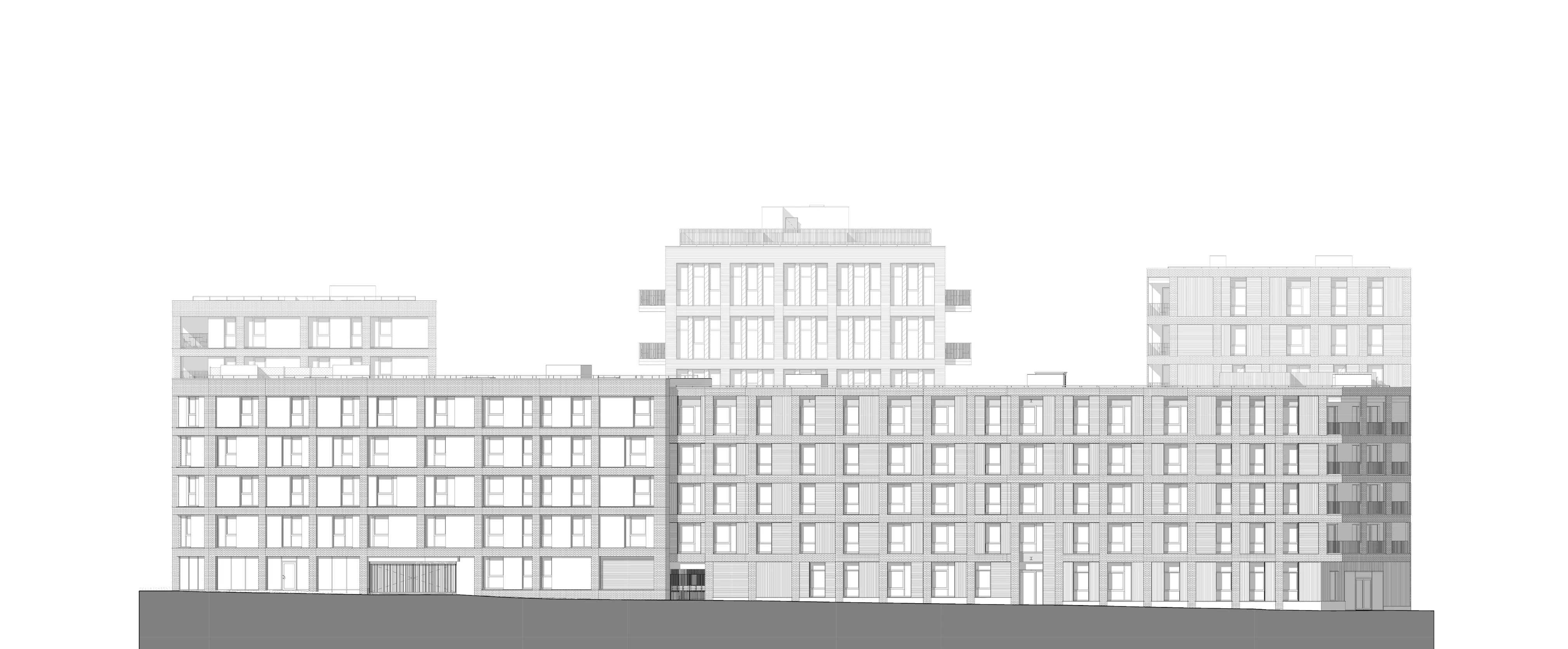

ORG approached Citygate Marchandises as a place of coexistence. Combining homes with workshops, retail with childcare, and open space with industrial circulation required careful orchestration not just of these mixed uses, but also of light, sound, movement and time itself. A modular design strategy allowed different scales of activity to unfold while enhancing both the feeling of place and ecological performance.
Three towers anchor the ensemble along the railway edge, providing homes with views and solar access. A lower level connects the project to neighboring buildings and creates continuity between street-level and roofs.


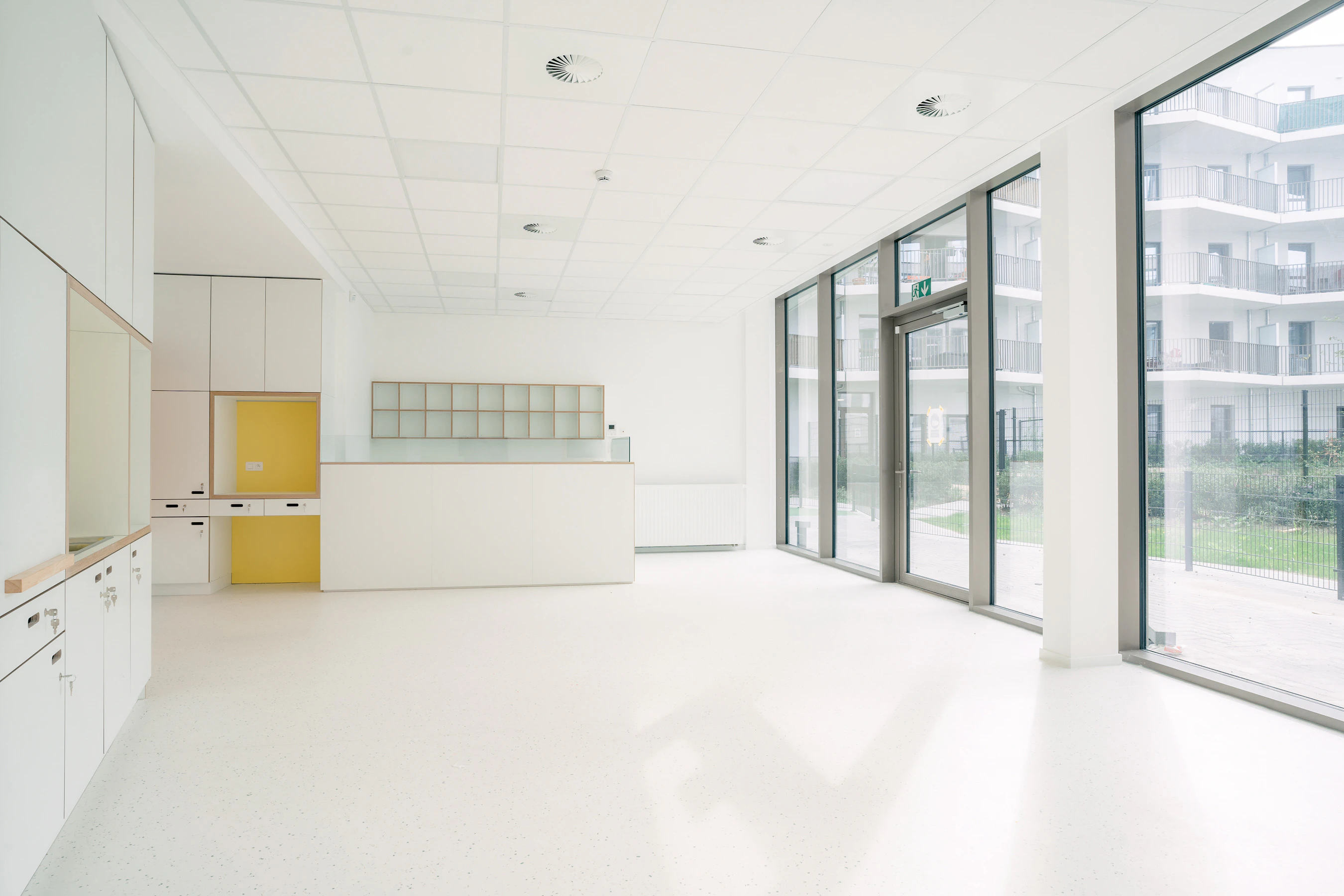
At ground level, a continuous ground level plinth offers seamless access to residential entrances, workshop loading zones, retail frontages, and the daycare centre, organized around a central courtyard that acts as both a meeting point and a buffer.
Throughout the design process, we balanced competing requirements: affordability targets, sustainability ambitions, functional separation and neighborhood integration. The result is an architectural system flexible enough to accommodate evolving needs while maintaining spatial coherence.

Delivered in 2024, Citygate Marchandises offers a refined model for urban density where homes, workspaces and public services coexist within a single, sustainable structure. The architectural language – a grid inspired by the site's industrial heritage – unifies the ensemble while allowing each program the space to flourish. Combined with biodiverse roofs and a rich mix of functions, the project brings to life a scalable model for future Brussels neighborhoods.


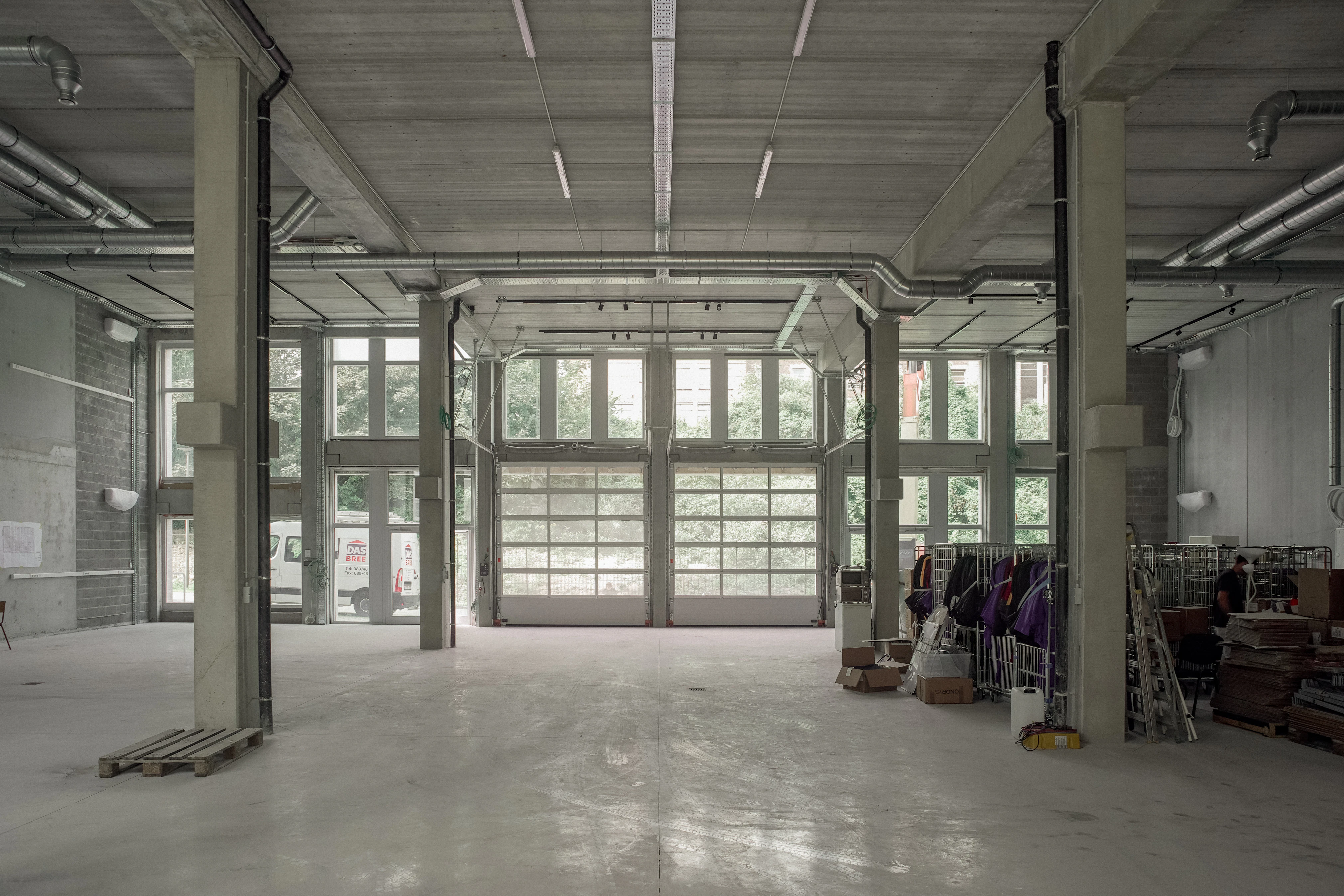
Facades act as a flexible system with varying infills: larger openings for workshops, intimate windows for homes, transparent thresholds for retail and community spaces. At street level, the plinth sustains economic activity and social inclusion by housing retail, production workshops and daycare in adaptable configurations. Above, 110 affordable housing units provide quality homes at controlled prices, addressing the city’s pressing need for affordable, well-designed residential space.


Rooftop gardens, high-performance insulation, solar gain strategies and renewable systems all contribute to the 100% energy-neutral design. Green roofs and patios contribute to the Brussels-Capital Region's biodiversity index, while the central courtyards offer much needed shared outdoor space in a dense urban setting.
Crucially, portions of the building were designed as BAM (Bâtiments à Affectations Multiples)—structures with the flexibility to shift functions over time. Today's office may well become tomorrow's apartment or workshop as the neighborhood evolves.


The project has garnered recognition, winning the Belgian Construction Award for Best Residential Development and the RES Award. Beyond accolades, however, Citygate Marchandises functions as a working demonstration: proof that housing and industry need not compete, that affordability and sustainability can align, and that architecture can operate as infrastructure. Cohesive. Flexible. Citygate Marchandises is ready to meet ever changing demands as the future unfolds.
As Brussels continues to grow and transform, projects like Citygate Marchandises point toward a new and refreshingly integrated approach. From now the city's productive past can shape its residential present and buildings can be designed not just to endure, but to evolve.