
FAB 181 featured in Architectura
Publication
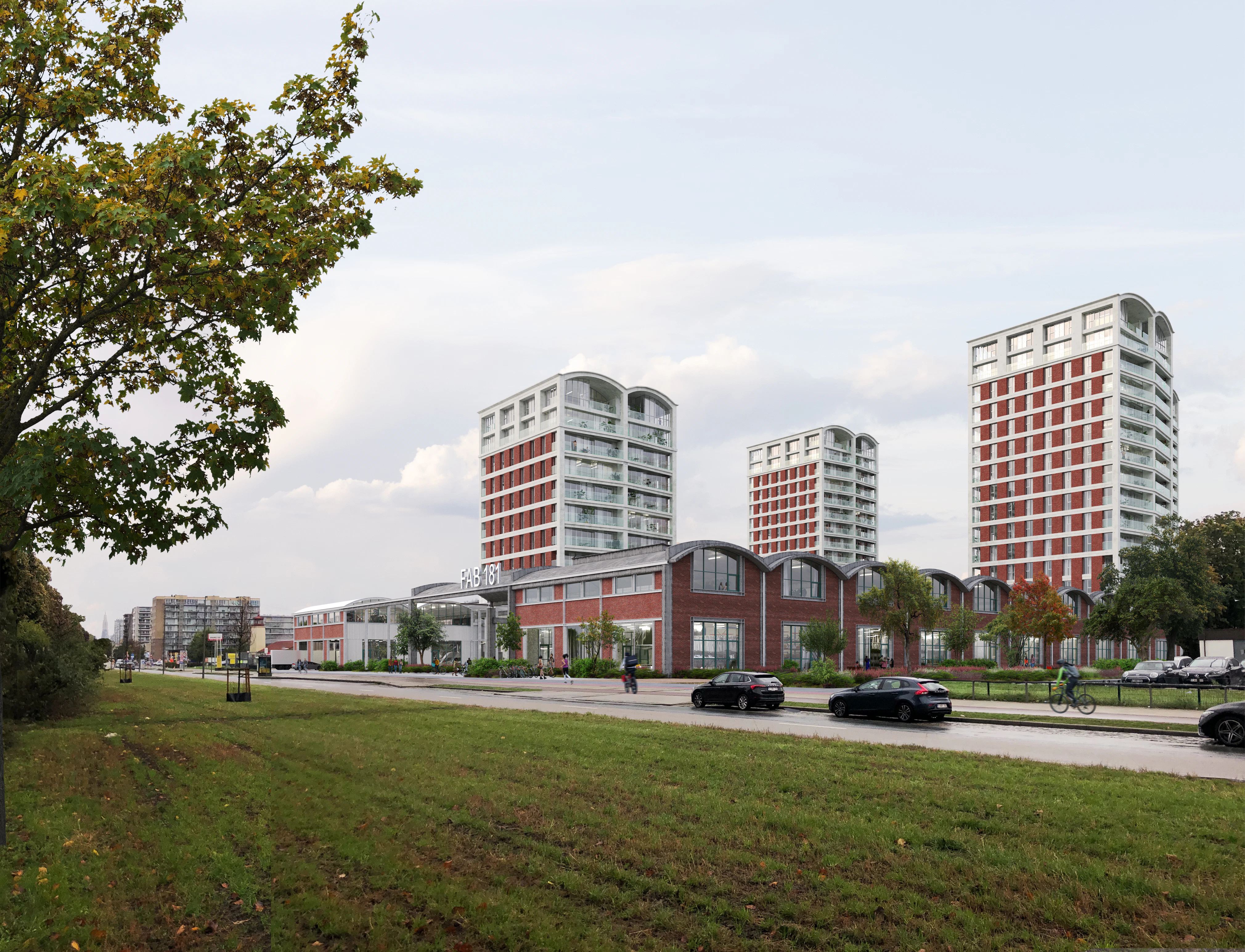
The Left Bank of Antwerp holds a layered history of productive industry. Factories, refineries and logistics yards once sustained the city's economy. Many have since been abandoned, leaving behind large infrastructural footprints with limited connections to bordering neighborhoods.
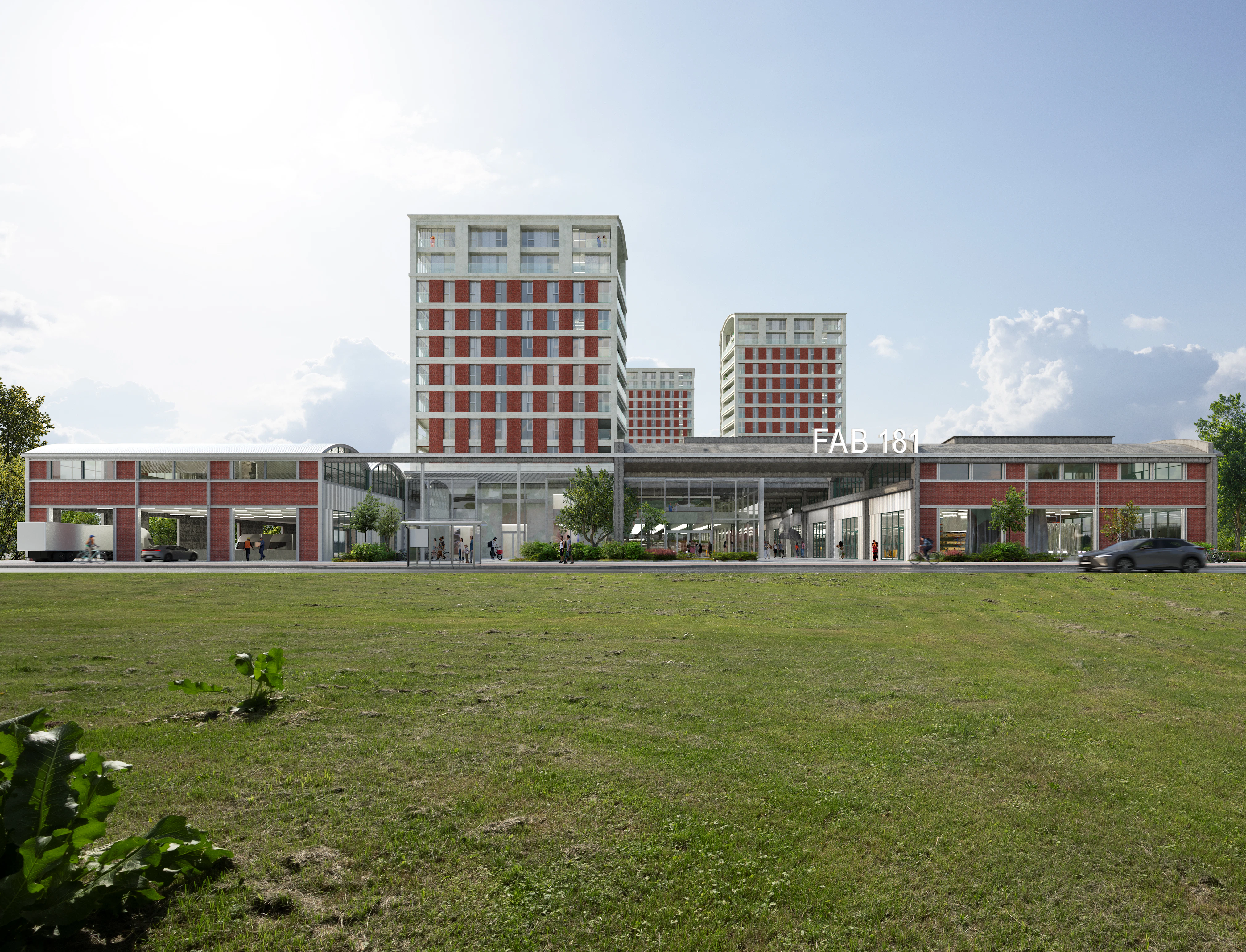
FAB 181 is one such example. This six-hectare site served as a bolts-and-joints production facility for decades. When operations ceased, the shell remained: a solid industrial structure surrounded by emerging residential blocks and adjacent to a regional nature park.
As a vast monolithic structure, this previously insular site was at risk of staying disconnected. The question was how to restore urban porosity, connect with the surrounding neighborhoods and parks, and support inclusive access?
The answer started by recognizing that this scale of intervention requires both sectional clarity and programmatic flexibility. Here, manufacturing and prototyping would need to be seamlessly integrated with housing, education and civic programs. The design would also have to respond to shifting economic demands over time, remaining open to as-yet-unknown future uses without requiring any kind of structural overhaul.

Unlike typical urban redevelopment that either demolishes or preserves, ORG approached FAB 181 with a hybrid logic able to unite schools and start-ups, people and production, sustainability and mobility.

The design process operated across scales, combining socioeconomic analysis with urban planning and architectural detailing. By embedding long-term flexibility from day one, we were able to reconceive this former industrial site as a thriving center of making, learning and community activity.
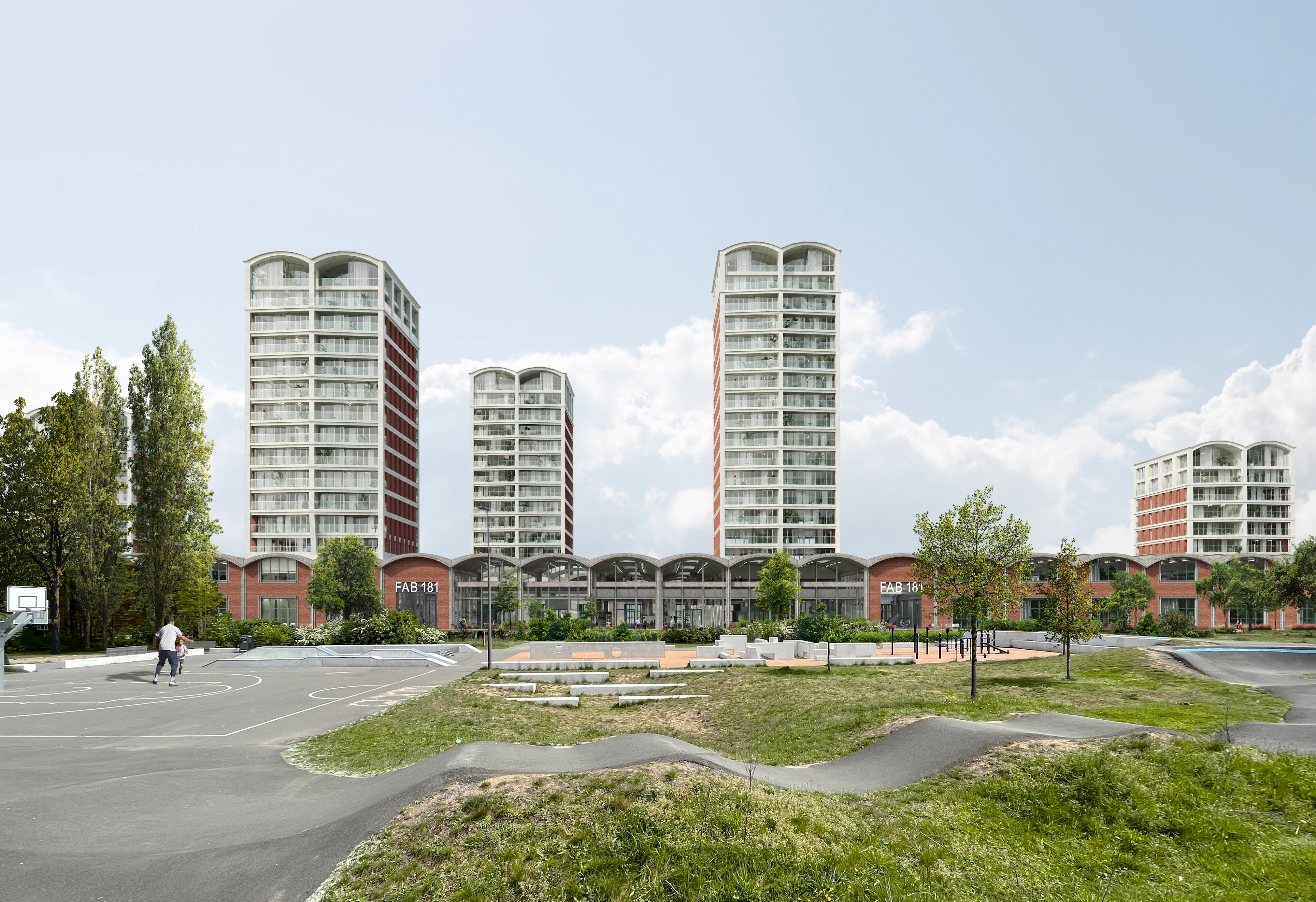
A socioeconomic study, conducted in collaboration with stakeholders from manufacturing, education, and neighborhood groups, defined the building's layout as a sequence: invent, make, sell. We then used this logic to shape the design, enabling flows between research, production and public interaction. Rather than impose a fixed program, the team used this framework to organize the building sectionally, allowing different types of activity to freely coexist without interference.

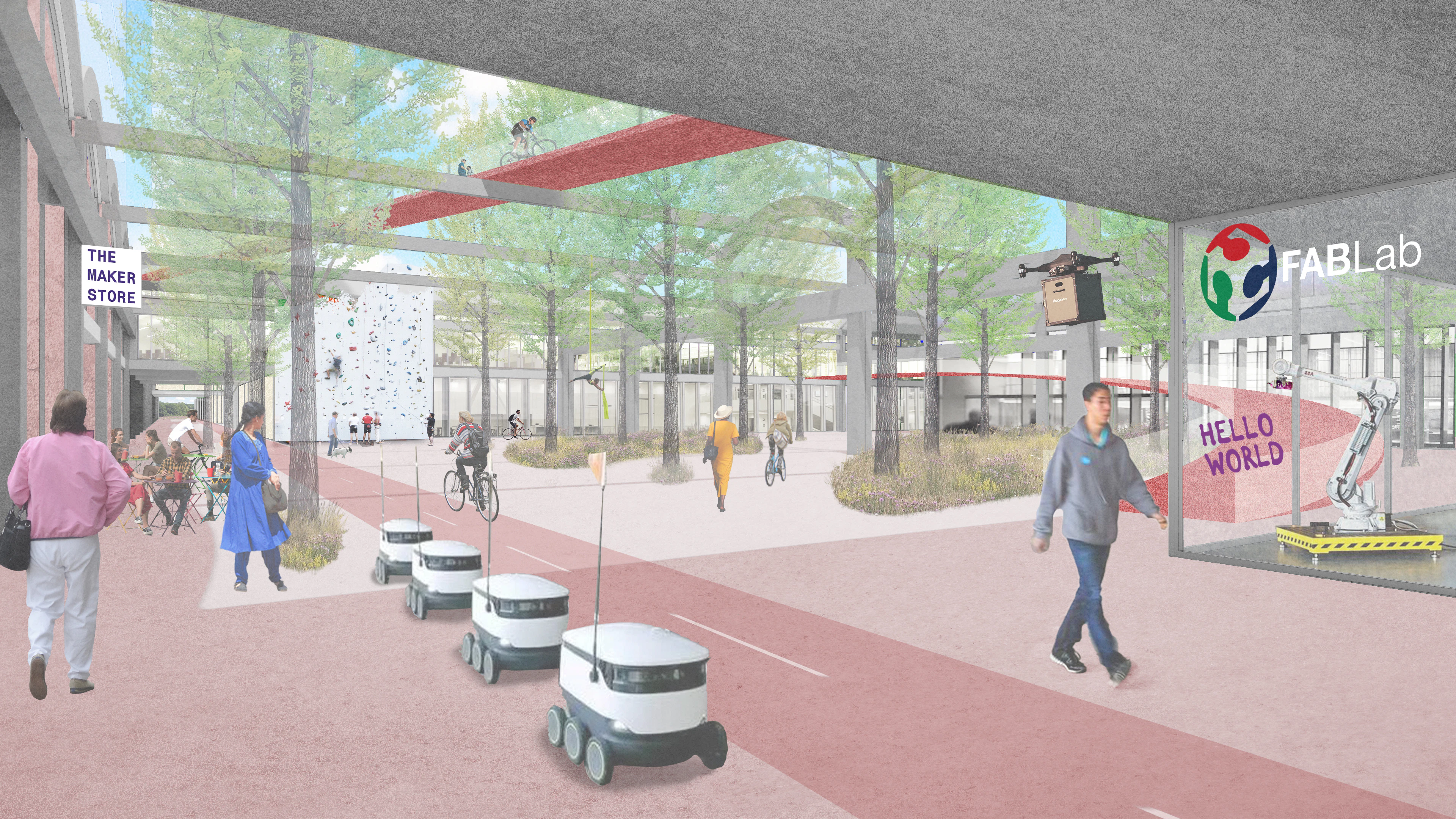
FAB 181 uses a spatially rational structure – defined by building dimensions, access paths, and drainage flows – to manage complexity and support a continued and seamless long-term evolution. As part of a ‘one building, two courtyards’ approach, production, education, and the living lab are designed around separate but interconnected courtyards. This arrangement supports different speeds and types of use, while preserving architectural coherence. The open space acts as both environmental infrastructure and public amenity.


FAB 181 proposes a hybrid model for productive city-making, preserving original industrial heritage while freeing up space for ever-evolving public, social and economic use.
Modular, large-span buildings offer high ceilings and flexible depths suitable for light manufacturing, small-scale production, and commercial activities. Their architectural repetition supports economy of scale and design consistency.

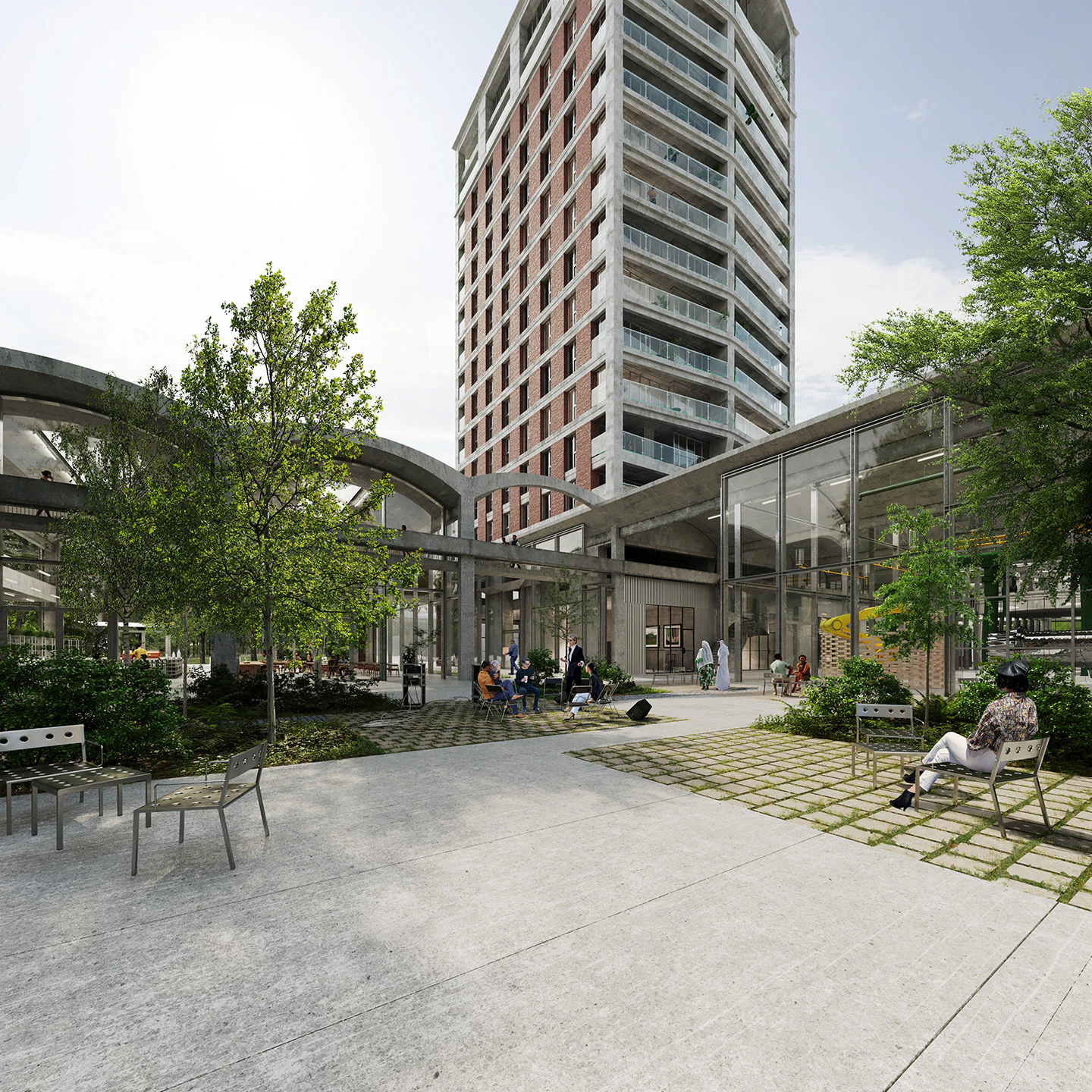
The two courtyards function both as environmental infrastructure and public amenity. One supports production logistics and material flows. The other opens to the neighborhood, providing green space, social meeting areas and ecological buffers. Together, they allow daylight to flood into the structure, creating a sense of openness in an otherwise dense urban block.
A durable, continuous surface integrates logistics, stormwater, circulation and landscaping. This not only simplifies maintenance, but also enables shared use between sectors and users.

The residential component weaves housing into this productive framework. A diverse mix of residential units covers everything from affordable housing to higher end apartments, alongside hospitality spaces that serve both residents and visitors. High-rise elements offer proximity to central Antwerp while maintaining access to the adjacent parkland. This mix anchors the project in authentic neighborhood life, ensuring that production and innovation remain connected to the rhythms of daily living.

FAB 181 is demonstrating how industrial sites can remain economically active and socially vibrant as part of a living infrastructure that can remain in harmony with whatever the future holds.


